
CASE STUDY
When Process Gets in the Way of Performance
What began as an effort to improve execution had evolved into an approach that consumed capacity, created friction, and offered little insight into actual performance. By helping leaders better understand the relationship between process and outcomes, the teams adopted a more practical way of working that improved visibility, focus, and effectiveness.

BUSINESS CHALLENGE
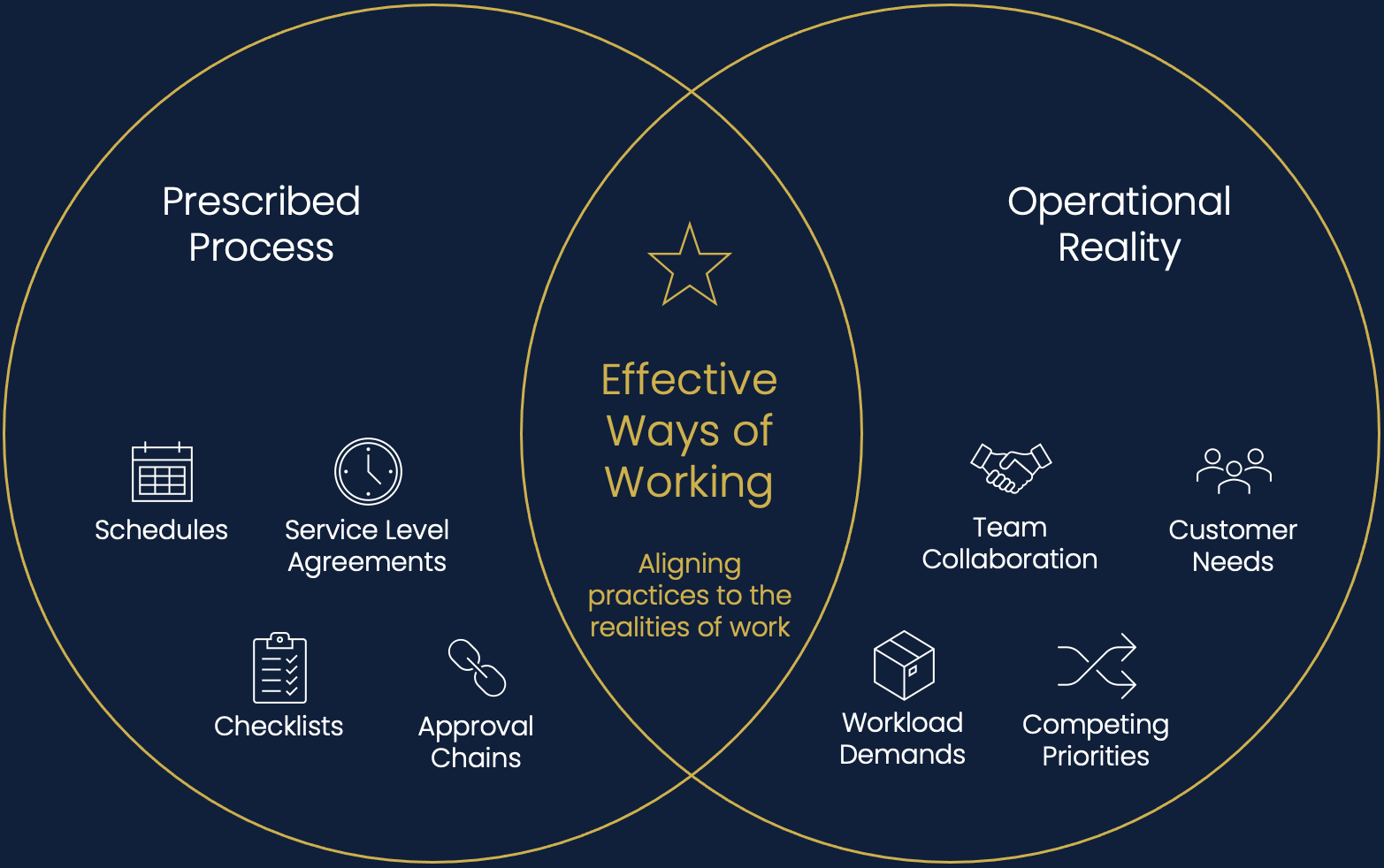
A team had adopted a prescribed way of working intended to improve execution, alignment, and delivery outcomes. Over time, however, maintaining the process itself required a growing investment of time and attention, making it increasingly difficult to determine whether those efforts were contributing to better results.
As demands on the teams continued to grow, the tension between process expectations and operational realities became more apparent. Despite significant effort devoted to planning, estimation, coordination, and reporting activities, improvements in performance, responsiveness, and stakeholder outcomes remained difficult to identify.
ENGAGEMENT APPROACH
The teams were already operating at capacity, so introducing another process change without evidence would have added to an already challenging environment.
Rather than assuming the existing approach was effective simply because it was widely accepted, I focused on understanding whether the time and effort being invested were producing meaningful returns. The objective was not to determine whether the process was being followed correctly, but whether it was enabling the outcomes leaders expected it to deliver.

KEY FINDINGS
PROCESS OVER
PURPOSE
Significant effort was invested in maintaining prescribed practices, yet there was limited understanding of how those activities contributed to better outcomes. The process became the objective rather than a means to an end.
INVISIBLE FLOW
OF WORK

The teams lacked visibility into how work progressed, where delays occurred, and what factors affected throughput. As a result, opportunities for improvement often went unnoticed.
CUSTOMER
DISCONNECTION

Work was planned and delivered largely without direct engagement from the people it was intended to serve. Important assumptions about needs, priorities, and success remained untested.
UNCHALLENGED
ASSUMPTIONS

Success was often inferred from the absence of complaints rather than validated through evidence. Without meaningful feedback, it became difficult to distinguish actual value from perceived value.
LOCAL
OPTIMIZATION
Teams focused on managing the work within their control while many factors affecting results existed outside their authority to influence. This limited their ability to address broader constraints impacting performance.
ROLE AUTHORITY
MISMATCH

Key responsibilities were assigned to individuals without the experience, authority, or organizational support needed to perform them effectively. As a result, important decisions lacked clear ownership and strategic direction.

STRATEGIC RESPONSE
Assigned Roles → Shared Ownership
Responsibility for outcomes was no longer concentrated in designated roles. The teams adopted a collective ownership model in which decisions, delivery, process improvements, and outcomes became a shared responsibility.
Predictive Planning → Evidence-Based Planning
Forecasting based on estimates was replaced with planning informed by historical performance data. Capacity decisions became grounded in observed performance rather than assumptions about future effort.
Limited Visibility → Operational Transparency
Work became easier to understand through improved visualization and flow-based practices. Teams gained greater visibility into priorities, commitments, dependencies, and the current state of work.
Activity Management → Value Flow
Attention shifted from managing and estimating individual work items to understanding how value moved through the system. Greater visibility into aging work helped identify bottlenecks, challenge stale priorities, and improve responsiveness.
Indirect Assumptions → Ongoing Stakeholder Engagement
Regular office hours created a practical mechanism for stakeholders to see progress, provide feedback, and influence priorities. This introduced consistent engagement in an environment where direct customer interaction had previously been limited.
Lagging Indicators → Operational Intelligence
Automated dashboards provided immediate visibility into flow metrics, delivery trends, and operational performance. Decisions could be informed by current conditions rather than delayed reporting or anecdotal observations
BUSINESS OUTCOMES

GREATER FOCUS ON
VALUE DELIVERY
Team members spent less time maintaining process activities and more time delivering meaningful work. Capacity previously consumed by coordination, estimation, and administration was redirected toward customer and business needs.

IMPROVED OPERATIONAL VISIBILITY
Greater visibility into work, constraints, and aging items provided a clearer understanding of priorities and emerging risks. This enabled faster identification of bottlenecks and more informed conversations about where attention was needed most.
STRONGER CUSTOMER CONNECTION
Regular stakeholder engagement created a better understanding of customer needs, priorities, and feedback. Decisions were increasingly informed by those being served rather than internal assumptions.
BETTER OPERATIONAL DECISION-MAKING
Real-time visibility into work and performance provided a more reliable basis for planning, prioritization, and availability. Discussions shifted from opinions and estimates to observable evidence and operational realities.

Facing Similar Challenges?
Let's explore what's shaping your results and what becomes possible when the right conditions are in place.